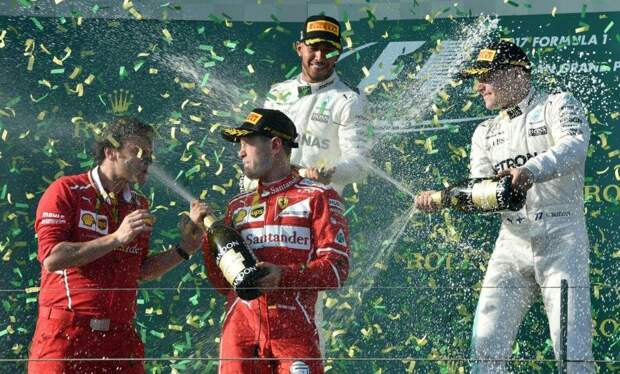
Every champagne spray on every podium on earth descends from one afternoon in France. Le Mans, June 1967: American driver Dan Gurney, having just won the 24-hour race alongside A.J. Foyt in a Ford GT40, was handed a magnum of Moët on the rostrum. Overcome, spotting Ford executives and journalists below, he shook the bottle, jammed his thumb over the neck, and hosed down everyone in range. Photographers caught it. A ritual was born whole — joy, waste, spectacle and luxury in a single gesture — and motorsport has repeated it after essentially every race since.
Formula 1 turned the spray into liturgy. The podium bottle became a contracted, branded object — over the decades the official fizz has passed among houses and even, in recent years, to Italian sparkling wine Ferrari Trento, to the mild scandal of champagne traditionalists. In countries where alcohol cannot be displayed, the podium switches to rosewater or non-alcoholic sparkling, which tells you something important: the ritual matters more than the liquid. What's being sprayed is victory.
A ritual born whole in one gesture: joy, waste, spectacle and luxury, hosed over everyone in range.
The locker-room monsoon
Team sports took the spray indoors and made it a weather event. The plastic-sheeted locker room after a World Series or NBA championship — goggles on, cases of sparkling wine sacrificed to the ceiling — is now as canonical as the trophy lift itself. Note the fine print: what gets sprayed is usually inexpensive sparkling wine, while anything genuinely good is drunk, not worn. Ski goggles appeared sometime in the 2000s after enough champions learned that sugary wine in the eyes is the worst part of winning a title.
Champagne earned this role honestly. It has been the wine of coronations and ship launches for centuries; sport simply inherited the symbolism and added better cameras. The pop of the cork is the only sound in drinks that means, unambiguously, something has been won.
Three ways to drink the podium
Spraying is for winners; the rest of us should drink the stuff. Three sparkling cocktails belong in every home bar. The French 75 — gin, lemon and champagne — is named after a French 75mm field gun and hits accordingly. The Air Mail, a Prohibition-era classic, is effectively a daiquiri in a tuxedo: rum, honey, lime and fizz. And the classic Champagne Cocktail, sugar cube and bitters, is the oldest trick in the book for making even modest bubbles taste ceremonial.
- 1 oz (30 ml) gin
- ½ oz (15 ml) fresh lemon juice
- ½ oz (15 ml) sugar syrup
- Brut sparkling wine to top (~3 oz / 90 ml)
Shake gin, lemon and syrup with ice, strain into a flute, top with cold bubbles, lemon twist. Named after a field gun; calibrated accordingly.
- 1½ oz (45 ml) aged rum
- ¾ oz (20 ml) fresh lime juice
- ½ oz (15 ml) honey syrup (1:1)
- Brut sparkling wine to top
Shake rum, lime and honey with ice, strain into a flute or over ice, top with fizz. A Prohibition-era classic: a daiquiri in a tuxedo, and the best champagne cocktail most people have never ordered.
- 1 sugar cube
- 2–3 dashes Angostura bitters
- Cold brut champagne to fill; lemon twist
Soak the cube in bitters, drop it in the flute, fill slowly with champagne and watch it climb. The oldest ceremony in the sparkling repertoire — est. 19th century, still undefeated.
Buying bubbles like a champion
For cocktails, never use your best bottle — a dry (brut) cava or crémant carries a French 75 beautifully at a third of the price. Save true champagne for drinking neat, cold but not frozen, in a white-wine glass rather than a flute if you actually want to taste it. And if you ever do get to spray a bottle on a podium: thumb over the neck, aim upward, and remember Gurney — the move only works if you genuinely can't help yourself.
Of course, the fastest-growing podium drink contains no alcohol at all. Chapter six: the athlete-led zero-proof movement.
Next — Chapter 06 / 10Zero Proof, Full Throttle