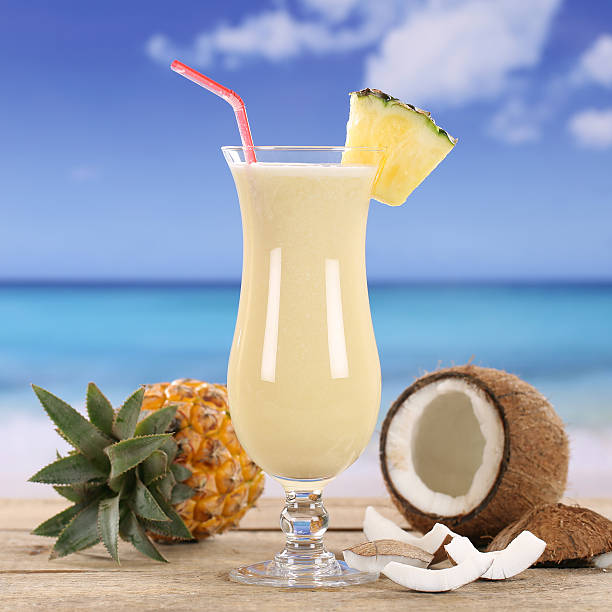
Every professional season ends the same way: a plane heading somewhere warm. The offseason beach holiday is as much a part of the athletic calendar as preseason camp, and it has an official drinks list — the great tropical trio of piña colada, mojito and mai tai. Sports pages fill every July with deck photos and beach-club stories; the drinks in frame are remarkably consistent. This chapter is about those three, because their origin stories are better than any invented celebrity anecdote.
The piña colada: born in a hotel that hosted champions
The canonical origin puts the piña colada at the Caribe Hilton in San Juan, Puerto Rico, where bartender Ramón «Monchito» Marrero is credited with creating it in 1954 after the hotel asked for a signature drink — a claim the hotel has celebrated for decades, and one strengthened by the era's new availability of Coco López cream of coconut. The Caribe Hilton was precisely the sort of glamorous mid-century resort where film stars and sporting celebrities of the age wintered, and the drink spread with the jet set. In 1978 Puerto Rico declared it the national drink; rarely has a government been so right.
The mojito: Havana's gift to hot afternoons
The mojito's roots reach back centuries to Cuban farmhouse drinks of aguardiente, lime, mint and sugar, refined in Havana's bars into the crisp highball we know. La Bodeguita del Medio built its worldwide fame on the drink. What matters for our purposes is the engineering: lime and mint over crushed ice with soda is one of the most efficient cooling systems ever devised, which is why it remains the default order of every off-duty athlete on every terrace from Miami to Marbella.
The mai tai: Trader Vic's masterpiece
The mai tai belongs to California, not the islands: Victor «Trader Vic» Bergeron claimed its invention at his Oakland restaurant in 1944, built around a fine aged Jamaican rum, lime, orange curaçao and orgeat. Legend says a Tahitian guest tasted it and exclaimed «maita'i» — «good!» — and the name stuck. It is the strongest and most grown-up of the trio, the tropical drink for people who otherwise order old fashioneds.
The offseason has an official drinks list, and its origin stories beat any invented celebrity anecdote.
The trio, properly built
- 2 oz (60 ml) white or lightly aged rum
- 3 oz (90 ml) pineapple juice
- 1½ oz (45 ml) cream of coconut
- 1 cup crushed ice; pineapple & cherry
Blend until smooth, pour tall, garnish extravagantly — restraint defeats the purpose. San Juan, 1954, still undefeated. Zero-proof version in chapter seven.
- 2 oz (60 ml) white rum
- ¾ oz (20 ml) fresh lime juice
- 2 tsp sugar
- 8–10 mint leaves; soda to top
- Crushed ice
Press mint gently with lime and sugar — bruised, never shredded — fill with crushed ice, add rum, top with soda, churn. Havana's cooling system, exported worldwide.
- 2 oz (60 ml) aged Jamaican rum (or split with rhum agricole)
- ¾ oz (20 ml) fresh lime juice
- ½ oz (15 ml) orange curaçao
- ½ oz (15 ml) orgeat
- Mint sprig & spent lime shell
Shake with crushed ice, dump everything into a rocks glass, garnish with mint. Trader Vic's original: rum-forward and bone-dry compared to its resort imitations.
The offseason principle
There's a reason this chapter sits deep in the series: tropical drinks are seasonal by design, and athletes treat them that way. The same discipline that keeps champagne on the podium and coconut water on the training table puts the piña colada strictly in July. Drink with the calendar and every one of these tastes better — scarcity is the best garnish there is. For the zero-proof colada, see chapter seven; for what alcohol does in-season, see chapter ten.
Next — Chapter 09 / 10Milk, Gatorade & Other Victory Drinks