The most interesting drinks launch by any athlete in recent years contains no alcohol whatsoever. In 2023, Lewis Hamilton — seven-time Formula 1 world champion and famously close to teetotal — introduced Almave, a non-alcoholic blue agave spirit created with the acclaimed Mexican distillery group Casa Lumbre. It wasn't a compromise product. Made in Jalisco from the same blue Weber agave as tequila, Almave was pitched as a serious spirit for people who want the ritual and the flavor without the ethanol — which is to say, for people who live like Hamilton does.
Hamilton is the sharpest example of a broad truth this series has been circling: the world's best athletes are, overwhelmingly, light drinkers or non-drinkers during their careers. Cristiano Ronaldo, who does not drink alcohol, produced the most-watched beverage moment in football history at Euro 2020 when he moved two soft-drink bottles aside at a press conference, held up water and said one word: «Agua». Novak Djokovic has built one of the most disciplined dietary regimes in sport — documented in his own book Serve to Win — and has spoken about how carefully he treats everything he consumes. The training table, it turns out, was zero-proof long before the trend had a name.
The world's best athletes were zero-proof long before the trend had a name.
The sober-curious surge
The rest of the world caught up in the 2020s. Non-alcoholic beer became a legitimate sports beverage — isotonic-positioned NA lagers now sponsor marathons and cycling events across Europe, and alcohol-free brands have become fixtures at race finish lines. Spirits followed: distilled non-alcoholic aperitifs, agave spirits and whiskey alternatives turned the mocktail from an apology into a category. For athletes, the appeal is obvious. For everyone else, the athletes are the appeal: nothing sells moderation like the people with the most measurable performance on earth.
Zero-proof drinks with actual authority
The mocktail's historical problem was sweetness — juice stacked on syrup. The modern fix is the same as in cocktails proper: acid, bitterness, salt and aromatics. The three recipes below need no specialty products except, optionally, a non-alcoholic agave spirit in the paloma; skip it and the drink still stands. Each one is built to be drunk from a proper glass, slowly, like it matters — because the ritual, as the F1 podium proves, is the real drink.
- 2 oz (60 ml) non-alcoholic agave spirit (optional)
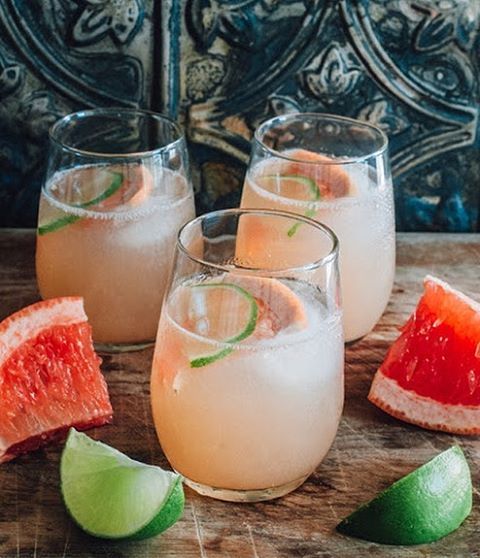
- 2 oz (60 ml) fresh grapefruit juice
- ½ oz (15 ml) fresh lime juice
- Pinch of salt
- Soda water to top
Build over ice in a tall glass, stir once, salt half the rim if you like. With an NA agave spirit it's uncannily close to the original; without one, grapefruit, lime and salt still make a superb highball.
- 8–10 fresh mint leaves
- ¾ oz (20 ml) fresh lime juice
- ½ oz (15 ml) sugar syrup
- Soda water to top
- Lots of crushed ice
Gently press (don't shred) the mint with lime and syrup, fill with crushed ice, top with soda, churn once. All of the mojito's lift, none of its afternoon tax.
- 2 oz (60 ml) non-alcoholic bitter aperitif
- 1 oz (30 ml) fresh orange juice
- Tonic or soda water to top
- Orange slice & green olive
Build over ice in a wine glass like a spritz. Bitterness is what mocktails historically lacked — modern NA aperitifs fix the category in one pour.
The performance case
Why do the best abstain? Because the physiology is unforgiving: alcohol measurably disrupts sleep architecture, blunts muscle protein synthesis, and adds a dehydration tax that athletes cannot afford in-season — we take a fuller look at the evidence in chapter ten. The zero-proof movement simply lets everyone else borrow the discipline without giving up the bar. Hamilton's insight was that people don't crave alcohol so much as they crave the moment it decorates. Pour the moment; hold the ethanol.
Next: the original athlete's drink, straight from the shell — the coconut water era.
Next — Chapter 07 / 10The Coconut Water Era